Cueva Bonita is one of La Palma's best-kept natural treasures. Situated on the coast of the municipality of Tijarafe, this spectacular sea cave is only accessible by water, making it an exclusive destination that few visitors to the island ever get to see. The light filtering in from the entrance creates blue and turquoise reflections on the water that make this place a truly unforgettable visual experience.
What is Cueva Bonita
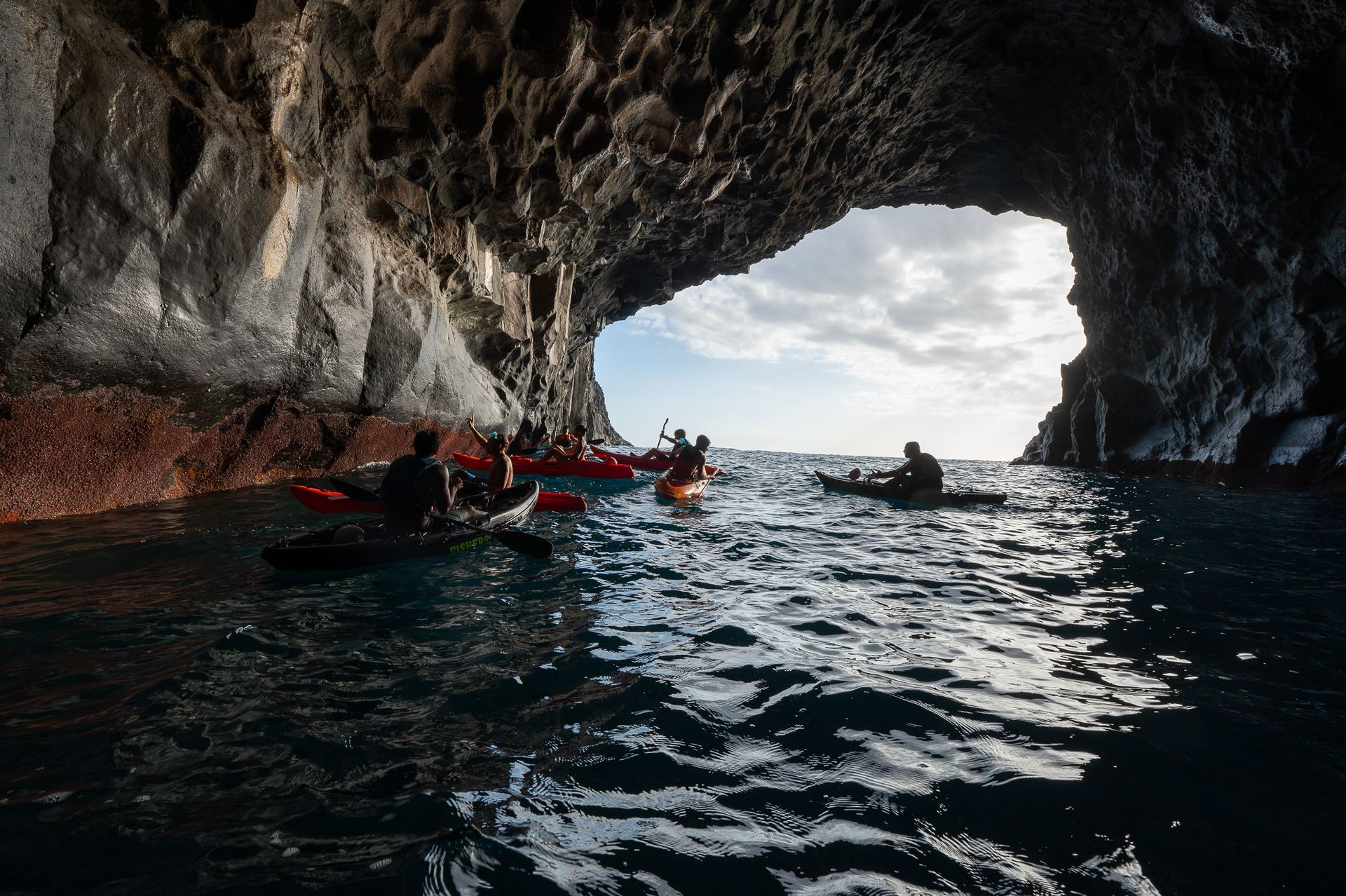
Cueva Bonita is a volcanic sea cavity located at the base of the cliffs of Tijarafe, on the west coast of La Palma. It was formed thousands of years ago by the action of the sea on the basalt rock, which gradually eroded the stone to create a cavern several metres deep with an opening to the ocean.
What makes Cueva Bonita special is the spectacle of light that occurs inside. When the sun's rays penetrate through the entrance, the light refracts in the crystal-clear water, creating blue, turquoise and green tones that are projected onto the volcanic rock walls and ceiling. On sunny days, a beam of light enters through an upper opening and generates an almost bioluminescent effect that leaves every visitor speechless.
The silence inside the cave, broken only by the gentle lapping of water against the rock, amplifies the feeling of being in a place outside of time. The basalt walls, sculpted by the sea over millennia, display textures and shapes that invite contemplation.
How to visit Cueva Bonita
Cueva Bonita is only accessible by sea. There is no trail or land access leading to it. This protects it from mass tourism and makes visiting it an even more special experience. There are essentially two ways to reach it:
By kayak (the recommended experience)
The most authentic and thrilling way to visit Cueva Bonita is by kayak. Our excursions depart from Porís de Candelaria and follow the spectacular volcanic coast of Tijarafe for approximately 30-40 minutes of paddling to reach the cave. The journey itself is already an experience: basalt cliffs tens of metres high, crystal-clear waters and the chance of seeing wild dolphins and sea turtles, although sightings are never guaranteed.
Upon reaching the cave, if sea conditions allow, we paddle the kayaks into the interior. It is a magical moment: the transition from the exterior light to the blue reflections inside is something that words cannot adequately describe. The guides usually ask for a few minutes of silence inside the cave so that each person can absorb the experience with all their senses.
The full excursion lasts around 2.5-3 hours (outward journey, cave visit, swim in a cove and return) and is suitable for all levels. No previous kayaking experience is required.
By boat
Several companies operate boat excursions from Puerto de Tazacorte along the west coast. Some of these trips include a stop in front of Cueva Bonita, although they generally do not allow entry into the cave's interior due to the size of the vessel. The experience is different from kayaking: more comfortable but less intimate.
When is the best time to visit Cueva Bonita
The best time to visit Cueva Bonita is from April to October, when sea conditions on the west coast are calmer. In winter, the Atlantic swell can make it impossible to enter the cave or even navigate the area.
As for the time of day, mornings tend to offer the best sea and light conditions. When the sun is high, the rays penetrate the cave with greater intensity and the blue reflections are more spectacular. The 9:00 AM departures are especially recommended.
The geological formation of the cave
Cueva Bonita is a perfect example of the interaction between volcanism and marine erosion. The west coast of La Palma is formed by basalt lava flows from different volcanic eruptions that have been layered over millions of years. The sea has gradually eroded the softer layers of rock, creating cavities, natural arches and caves like this one.
The hexagonal basalt columns that can be observed on the cave walls were formed by the slow cooling of lava upon contact with water. These formations, similar to those of the Giant's Causeway in Northern Ireland, are a spectacular example of volcanic geology that can be appreciated from water level.
What to bring for your visit
- Swimwear and comfortable clothing: You will get wet in the kayak and will probably want to have a swim.
- Sun protection: Water-resistant sunscreen, cap and sunglasses.
- Waterproof camera: The photos inside the cave are spectacular. Our guides also take photos of the group.
- Water: Although we provide water at the end of the excursion, it is advisable to bring a small bottle.
- Towel: To dry off after your swim in the cove.
"Cueva Bonita is one of those places that reminds you how extraordinary nature can be when given the time and space to create. Entering by kayak and seeing the blue reflections on the water is an experience you will never forget."
If you are planning your trip to La Palma, Cueva Bonita should be on your list of essentials. Combine it with a visit to Porís de Candelaria and a sunset in Tijarafe for a perfect day on the west coast. Check out our itineraries for 3 days and 7 days to fit this experience into your route.